Printing on Jute in 2026: Screen, CMYK, Digital, Foil and Embroidery Compared
· 5 min read · Updated
The short version
Screen printing is priced per colour per side, so colour count drives cost more than most buyers expect. Dropping from four spot colours to two often saves more than reducing GSM.
Raw hessian causes significant dot gain. Photographic and fine-detail artwork needs lamination or a juco blend to hold together.
Digital and transfer methods carry low or no set-up cost, which makes them the right answer for short runs and many-design programmes even though per-unit cost is higher.
Supply vector artwork with Pantone references and confirm colours on the actual fabric — a colour approved on paper will not look the same on a natural fibre ground.
Jute is a hard surface to print on, and knowing why explains most of the decisions that follow. The weave is open, so ink spreads into the gaps and fine detail thickens — dot gain, in printing terms. The fibre has natural slubs and colour variation, so the ground is neither flat nor perfectly consistent. And the base colour is a warm mid-brown, which means light inks need more opacity than they would on white cotton.
None of that is a problem once the method matches the artwork. Here is how the eight methods we run compare.
The methods compared
Method
Colour range
Set-up
Detail
Best for
Screen print
Spot colours, priced per colour
Per colour per side
Good
Volume runs, bold logos, flat colour
CMYK / process
Full colour from four inks
Per design
Very good on juco
Photographic artwork at volume
Digital
Full colour
Minimal
Very good
Short runs, many designs, gradients
Transfer
Full colour
Low
Very good
Small quantities, complex artwork
Foil
Metallic
Per design
Moderate
Premium gifting, luxury retail
Glitter
Specialty
Per design
Low
Seasonal and promotional novelty
Embroidery
Thread colours
Digitising, once
Moderate
Premium marks, small logos, durability
Tonal
Single, close to ground
Per design
Moderate
Understated, texture-led branding
Set-up cost is per design per colour where noted. Detail ratings assume laminated jute or juco; raw hessian reduces all of them.
Screen printing: still the volume answer
For runs of any size with a flat-colour logo, screen printing remains the most cost-effective method by a wide margin. Ink sits on the surface with real opacity, colours are matched to Pantone references, and once the screens exist the per-unit cost is very low.
The commercial thing to understand is that it is priced per colour per side. Each colour needs its own screen and its own pass. A four-colour design printed both sides is eight screens and eight passes; the same design in two colours on one side is two. This is why colour count is usually the first place to look when a quote comes back over budget — and unlike reducing fabric weight, it does not weaken the bag.
CMYK and digital: when the artwork is photographic
Four-colour process work builds a full-colour image from cyan, magenta, yellow and black. On raw hessian it struggles — dot gain closes up the halftones and the image goes muddy. On laminated jute or a juco blend it works properly, which is precisely why juco exists as a fabric.
Digital printing removes the set-up cost almost entirely, which changes the economics for short runs and for programmes with many designs. Twenty designs of 250 units each is painful in screen print and straightforward digitally. Per-unit cost is higher, so it crosses over against screen printing somewhere in the low thousands depending on colour count.
Foil, glitter, embroidery and tonal
These are the finishes that make a bag feel considered rather than merely branded.
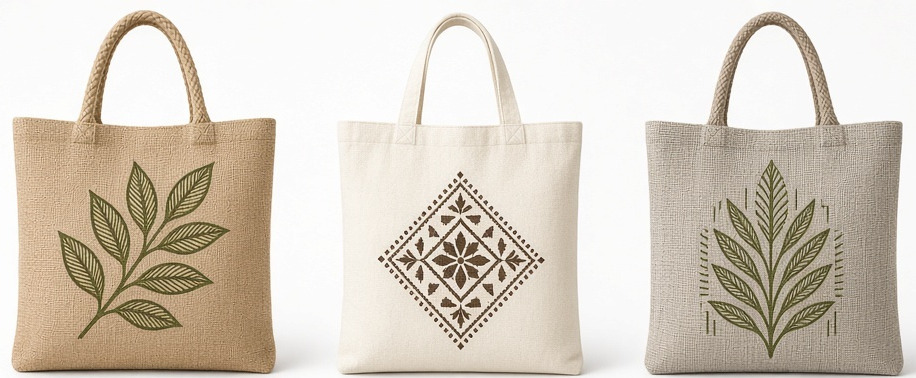
Foil gives a genuine metallic that ink cannot match. It suits gifting and premium retail, and it works best on simple, bold shapes — fine serif type in foil on a textured ground is a struggle.
Glitter is a specialty application for seasonal and novelty work. Keep the coverage area modest; large glitter panels stiffen the fabric.
Embroidery is the most durable decoration available and reads as the most premium. It is priced on stitch count, so small marks are economical and large fills are not. Digitising is a one-off cost per design.
Tonal printing uses a colour close to the fabric ground so the mark appears as texture rather than graphic. Understated, and increasingly requested for premium supermarket lines.
Artwork rules that prevent reprints
Send vector artwork — AI, EPS or PDF with outlined fonts. Raster files at low resolution are the most common cause of a soft print.
Specify Pantone references, and expect them to shift on a natural ground. A Pantone approved on coated paper will read warmer on jute.
Respect minimum line weights. Hairlines and small reversed-out type fill in on an open weave. If the design depends on 0.25pt rules, it needs lamination or a different fabric.
Confirm the print area against the finished bag, not the flat panel. Gussets, hems and handle attachment points all eat into usable area.
Approve a strike-off on the actual fabric before bulk. Colour on screen, colour on paper and colour on woven jute are three different things.
If you send artwork with the enquiry, we will tell you which methods it suits and where it will need adjusting — before you have paid for anything. Send the files and the quantity and we will come back with options rather than a single price.
Frequently asked questions
What is the best printing method for jute bags?
For volume runs with a flat-colour logo, screen printing is the most cost-effective by a clear margin. For photographic or full-colour artwork, four-colour process on laminated jute or juco. For short runs and many designs, digital printing, because it has almost no set-up cost.
Why does screen printing cost more for more colours?
Each colour needs its own screen and its own print pass. So a four-colour design is four screens and four passes, and printing both sides doubles it again. Reducing colour count is usually the cheapest saving available on a print budget.
Can you print full-colour photographs on jute?
On laminated jute or a juco blend, yes — the smoother surface holds halftones properly. On raw hessian, dot gain closes up the detail and photographic work goes muddy, so it is not recommended.
What file format should I supply artwork in?
Vector — AI, EPS or PDF with fonts outlined — plus Pantone references for spot colours. If only raster files exist, supply them at high resolution at final print size, and expect fine detail to need adjustment for the weave.
Will the printed colour match my brand exactly?
It will be close, but a natural fibre ground shifts colour warmer than coated paper does, and jute has inherent shade variation between batches. Always approve a strike-off printed on the actual production fabric rather than signing off from a screen or a paper proof.
custom jute bag printing
screen printing on jute
CMYK printing hessian
jute bag branding methods
promotional bag print artwork
Talk to the people who make them
We weave, print and stitch jute, cotton and juco bags in Kolkata, India, and quote DDP so the price you see is the price that lands. Send a specification and we will come back with options.
 TexoFibre Global